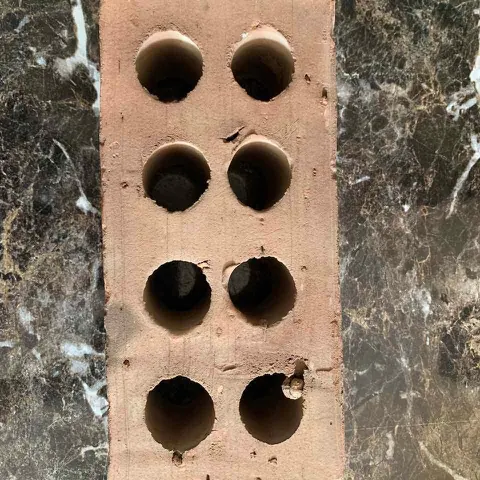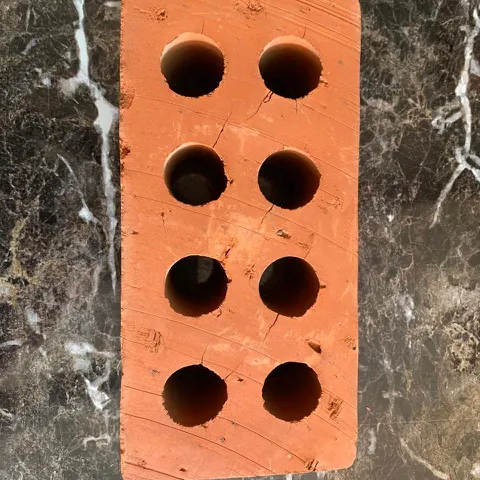
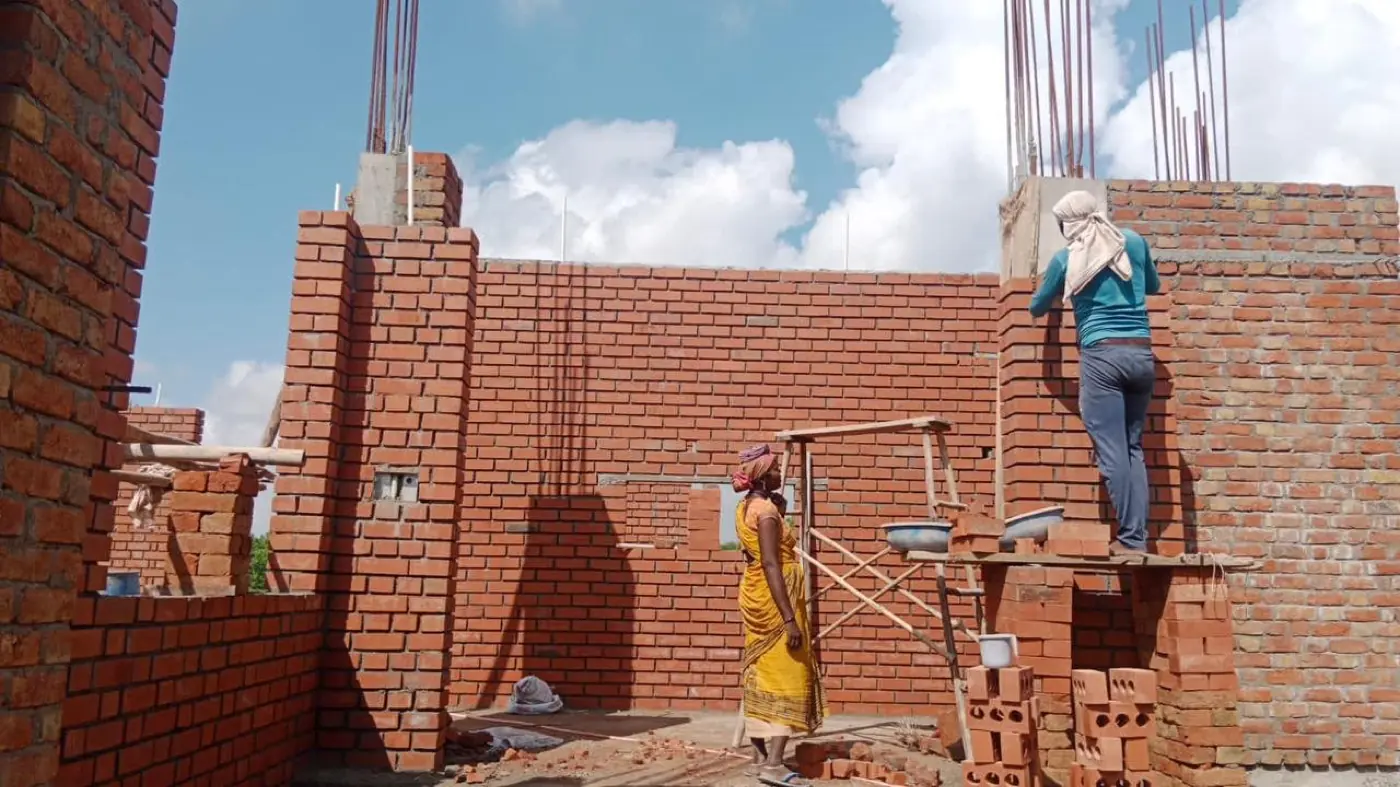
A plastered wall hides poor brickwork. An exposed wall does not. The good news is that most problems with exposed wire cut brick come from a handful of habits on site, and they are easy to fix before the first course goes down.
Before laying
Store the bricks dry
Stack bricks on planks, off the ground, and cover them before rain. Bricks that soak up muddy water carry salts into the wall, and those salts come out later as white patches (efflorescence).
Mix bricks from several pallets
Even a batch-matched order has slight shade variation. Masons should pull bricks from three or four pallets at a time so any variation spreads evenly instead of showing as bands.
While laying
Mortar mix and joints
A 1:6 cement-sand mortar is common for load-bearing walls and 1:4 for half-brick walls, but follow your engineer. Use clean, washed sand. Keep joints at an even 10 mm with a gauge rod so the courses line up across the whole elevation.
Keep mortar off the face
Wire cut bricks have a smooth face, and dried mortar on it is hard to remove. Wipe smears off with a damp sponge as you go. Do not wait for the end of the day.
Rake the joints
Rake joints about 10 mm deep while the mortar is still green. Point them later with matching mortar. A raked joint throws a shadow line that makes exposed brickwork look crisp.
After laying
- Cure the wall with water for about seven days.
- Let it dry fully. This can take a few weeks in the monsoon.
- Clean the face with water and a soft brush. Avoid strong acids unless the manufacturer approves them.
- Apply a clear, breathable sealer to cut water absorption and staining.
Choosing bricks for an exposed wall? Start with our exposed wire cut bricks, or see finished walls on the projects page.